
Education For Life Academy
Where Black History Lives!

Unit 7: The Great Migration & Harlem Renaissance (1916 – 1935)
The Standing on the Shoulders of Giants Curriculum
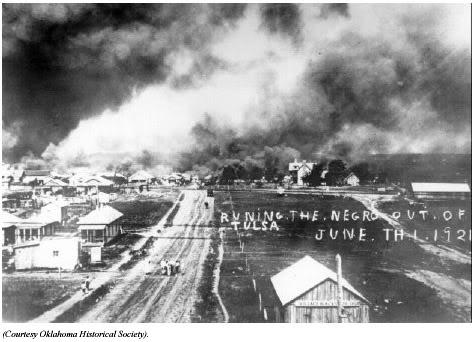
On May 31, 1921, a white mob of thousands launched a full assault on the community of Greenwood, a thriving Black enclave in Tulsa, Oklahoma. The mob attacked African American residents and set fire to their homes and businesses, igniting one of the worst race riots in U.S. history. The details are grueling: war planes dropped bombs on Greenwood and fired machine guns at Black residents as they ran for cover, and police officers and the National Guard participated in the brutality. This act of white racial terror destroyed 35 city blocks and left 10,000 African Americans homeless. The mob killed at least 300 African American men, women and children and brutalized hundreds more. The reason—an alleged rape of a 17-year old white female by a 19 year-old Black male. Although the allegations were highly suspect, and the Black youth, Derrick Rowland, was exonerated, the circulation of the news by local newspapers and the Ku Klux Klan galvanized white rage. And like most lynchings of Black men during the late 19th and 20th centuries, the charges of rape masked a deeper reality; many whites resented challenges to their feelings of white racial superiority, including displays of Black success. White resentment and envy ran deep in Tulsa long before the allegations of rape.
Greenwood, once referred to as “Little Africa,” was a prosperous African American community that stood as a testament to the self-reliance, pride and mutual cooperation that shaped the rebuilding of Black life in the aftermath of slavery and Reconstruction. The Black district was home to dozens of profitable businesses, newspapers, theaters, libraries and banks, including several multimillionaires. Booker T. Washington referred to Greenwood as the “Negro Wall Street,” later known as “Black Wall Street.” In the early 1900s, Greenwood attracted southern migrants who were fleeing to the North and West in an attempt to escape the brutality of white racial domination in southern states, including economic and political repression. What many African Americans found when they traveled to the North and West was more segregation. Although racism divided Tulsa, Black residents pooled their resources together to create a lucrative business community and Black professional class. In the face of racial discrimination and segregation, African Americans in Greenwood achieved self-determination.
The destruction of Black Wall Street resulted in approximately $1.5 million in damage (equivalent to $20 million today), yet white rage went unpunished. Not one of the thousands of white rioters was arrested.


View the following materials:
"Ever Heard Of ‘Black Wall Street"? (10 min)
DOCUMENTARY: Black Wall Street: The Tulsa "Riot" of 1921 (1:16 hour)
VIDEO: Black Wall Street - Before They Die (6:31 min)


Class Overview

- Recount the true story of “Black Wall Street” and its destruction, as told by eyewitness accounts from both blacks and whites
- Identify how the local, city and state governments and media of Oklahoma collaborated in the Tulsa Massacre and its cover-up
- Understand the role the Ku Klux Klan played in the Tulsa Massacre of 1921




Class 3: Black Wall Street: The Tulsa "Riot" of 1921
Page 1 of 2
After completing this lesson, students
will be able to:


