Education For Life Academy
Where Black History Lives!

The Standing on the Shoulders of Giants Curriculum
The systematic study of African contributions to world civilization are often omitted or glossed over in school curricula. Formal educational institutions in the United States have failed to expose students to the truth of Black history and its profound legacy in the shaping of our nation and the world. In order to understand what drives these omissions and distortions, especially when it comes to the history and cultures of people of African descent, it is critically important to examine the relationship between POLITICS, EDUCATION, POWER, and IDEOLOGY.
This unit explores these issues by posing a fundamental question, “Why study Black history?” To answer this inquiry, we begin by introducing students to the work and legacy of Dr. Carter G. Woodson, also known as “The Father of Black History.” Woodson, a pioneer in the study of Black History and the founder of Negro History Week (later expanded to Black History Month), insisted that the American education system — a system of mis-education as he would say — played a critical role in the perpetuation of racial oppression, inequality and mental brainwashing. “The thought of the inferiority of the Negro is drilled into him in almost every class he enters and in almost every book he studies,” wrote Woodson.
Although written in 1933, the central thesis of Woodson's argument remains relevant today, and the problems of “mis-education” have yet to be rectified. In his classic book, The Mis-education of the Negro, Woodson argued that public education has historically been developed as “propaganda” to legitimize unequal power relations as opposed to providing a strong foundation for individual and community empowerment. To combat this propaganda, Woodson collaborated with African American educators,


John Henrik Clark: A Great and Mighty Walk (from where you left off in class to end)
Carter G. Woodson Letter to Thomas Barnes (5 min) click on image to enlarge
- Preface (10 mins)
- Chapter III: How We Drifted Away from the Truth (15 mins)
- Chapter XIII: Understand the Negro (15 mins)
Advanced Study: Carter G. Woodson - Pioneer in Black Studies & History (30 min.)


Class Overview
- Identify Carter G. Woodson and discuss his contributions to African American and American history
- Define the term "propaganda" and examine how it relates to the teaching of African American and African history in the past and present
- Discuss the concept "miseducation" and identify its potential effects
- Examine a primary source document and make inferences regarding its audience, author, message and relevance


Class 2: The Miseducation of the "Negro"
Page 1 of 2
After completing this lesson, students
will be able to:
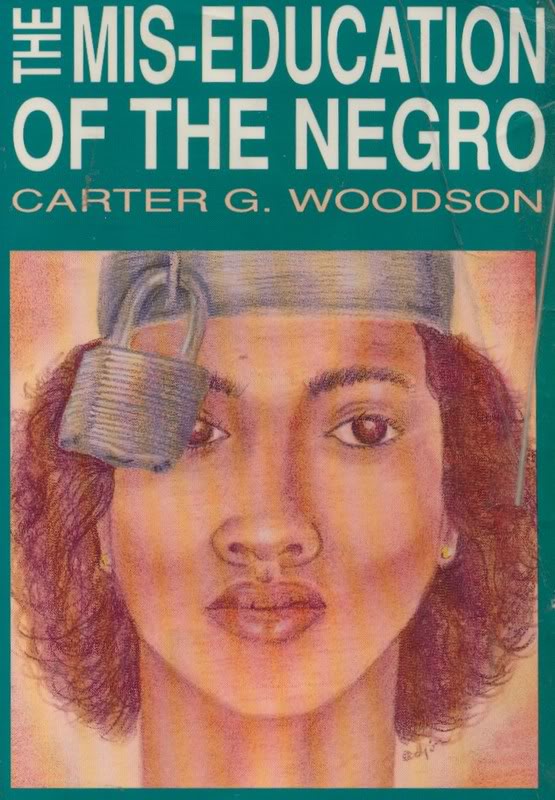
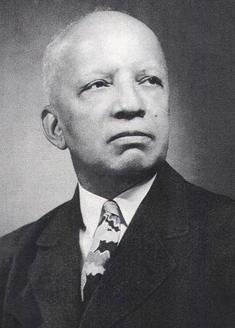
“If you control a man's thinking you do not have to worry about his action. When you determine what a man shall think you do not have to concern yourself about what he will do. If you make a man feel that he is inferior, you do not have to compel him to accept an inferior status, for he will seek it himself. If you make a man think that he is justly an outcast, you do not have to order him to the back door. He will go without being told; and if there is no back door, his very nature will demand one.”
- Carter G. Woodson, The Mis-Education of the Negro
“Why not exploit, enslave, or exterminate a class that everybody is taught to regard as inferior?”
- Carter G. Woodson

Read/View the following material:

Intro Unit: The Politics of Education – Enlightenment or Propaganda?