
Education For Life Academy
Where Black History Lives!

The Standing on the Shoulders of Giants Curriculum
To preserve their legacy and reflect their accomplishments, they built remarkable statues, monuments and temples that continue to astound the modern world. When the rest of the world remained in what has been called “the Dark Ages,” the people of the Nile Valley region in north and east Africa were living in a period of enlightenment, prompting archeologists to refer to Africa as “the cradle of civilization.”
The racial characterization of the Ancient Egyptians has been one of the most controversial aspects of Egyptology — a branch of archeology founded in the 1800s, which focuses exclusively on the study of Ancient Egyptian history and culture. Despite overwhelming evidence that confirms the African origins of Ancient Egypt, Egyptologists and cultural producers have portrayed Ancient Egyptian civilization as Mediterranean, Asian, or Caucasian. More recently, in order to disassociate Egypt from the African continent altogether, many scholars have begun to claim (and teach) that Egypt is a part of the “Middle East”— a fairly recent geographical invention — rather than part of the African continent. Most of the artifacts and images of Ancient Egypt that are commonly shown in history books, documentaries and Hollywood films emphasize an era of Greek and Roman rule following the reigns of Alexander the Great through Cleopatra VII, 336 - 30 B.C.E. By this time the Egyptian population had intermixed with foreign people for over 1,000 years, creating a multi-racial population. Ancient Kemet – or Ancient Egypt under African rule, lasted for well over 2,000 years before Greek and Rome were established as nations. All of the major monuments, statues and temples in Ancient Egypt were constructed under African rule. Yet rarely are the contributions and images of Ancient Egypt before foreign invasion highlighted in historical studies and popular culture. Images of the original architects of the Great Pyramids and the Sphinx, as well as statues and tomb paintings, for instance, reflect men and women of African descent in varying shades of black and brown, affirming their identity as African people.
It is important to note that the ancient world did not subscribe to the same racial concepts we use today. Racism as we know it did not exist. Many of the most prominent ancient Greeks and Romans openly acknowledged the genius of the "Ethiopians"--a term used to refer to Africans in general--and Greek scholars spent many years studying in Egypt. However, throughout the course of the 18th and 19th centuries, Egyptologists, scientists and intellectuals challenged this established knowledge by claiming that Egypt should be classified as a “Caucasian” civilization. We call this process racialization — the act of imposing a racial meaning to a relationship, social practice or group where one did not previously exist. This preoccupation with racializing the Egyptians as non-African and non-Black has had a lasting impact on both the shaping and erasure of African history, and by extension world history.
Some of the most explicit testimony regarding the race of Ancient Egyptians came from Ancient Greeks. Many Greek scholars including Pythagoras, Aesop and Plato traveled to Egypt for study, and they credited Egypt as the model for classical Greek civilization. At that time, the race or color of the Egyptians was not a mystery. For instance, Herodotus, often celebrated as the “father of history,” described the Egyptians as “black-skinned and wooly-haired.” Similarly, the famed Greek philosopher, Aristotle referred to both the Egyptians and Ethiopians as “very black.” In fact, the name “Ethiopia,” a term that was used to describe Africans more broadly, derives from the Greek words ethios and ops meaning “burnt faces.” In ancient times, black skin did not carry the negative stigma it does today. Racism and white supremacy are modern inventions with origins in late 18th century Europe and the Trans-Atlantic Slave Trade.


Class Overview cont.
Page 2 of 3
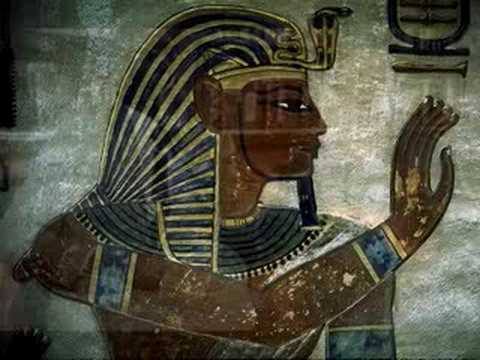
- DNA Analysis of Ramesses III (5 min)
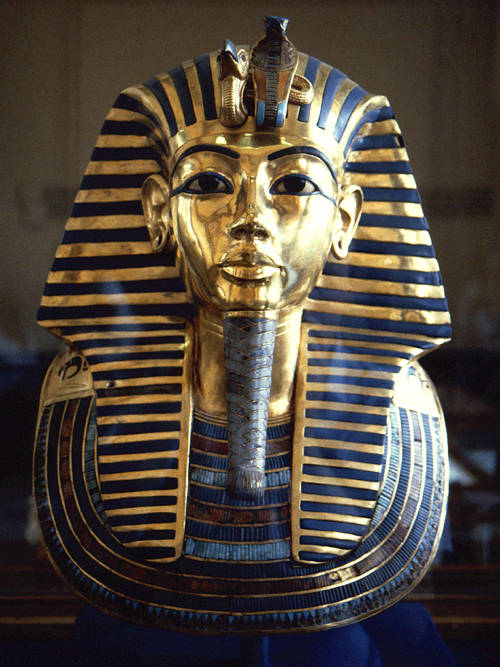

Cheikh Anta Diop and Theophile Obenga Were Right, (The pyramids of Egypt were not built by slaves!) Copyright © 1999-2011. Africa Resource Center, Inc.


Dr. Theophile Obenga,
Professor emeritus, San Francisco State University


Unit 1: Ancient Africa (200,000 B.C. – 646 A.D.)
Class 5: The Whitening of Ancient Kemet/Egypt
