
Education For Life Academy
Where Black History Lives!

The Standing on the Shoulders of Giants Curriculum
Akhenaten’s wife, Queen Nefertiti, assumed the responsibilities of her husband and, though she was adept at this, his neglect of his duties had already resulted in enormous loss of Egypt’s wealth and prestige. During Akhenaten’s reign, the treasury was slowly depleted, military discipline and efficacy was lax, and the people of Egypt, deprived of their traditional religious beliefs and the financial benefits associated with religious practices, suffered. Those who had once sold statuary or amulets or charms outside of temples no longer had a job, as the selling of such objects was illegal and those who worked in, or for, those temples were also unemployed. Foreign affairs were neglected as completely as the domestic and, by the time of Akhenaten’s death in 1336 BCE, Egypt had fallen far from its height under the reign of Amenhotep III.
Akhenaten’s son and successor, Tutankhamun, tried to reverse the fortunes of his country in the brief ten years of his reign but died at the age of 18 before he could accomplish his goals. He did, however, overturn his father’s religious reforms, open the temples, and re-establish the old religion. His successor, Ay, continued these policies, but it would be Ay’s successor, Horemheb, who would completely erase, or try to, the damage done to the country by Akhenaten’s policies. Horemheb destroyed the city of Akhetaten, tore down the temples and monuments to Aten, and did this so thoroughly that later generations of Egyptians believed that he was the successor to Amenhotep III. Horemheb restored Egypt to the prosperity it had enjoyed before Akhenaten’s reign, but Egypt never was able to manage the heights it had enjoyed under Amenhotep III, the luxurious pharaoh, diplomat, hunter, warrior, and great architect of Egyptian monuments.



Pharaoh Amenhotep III & Queen Tiye

Queen Tiye, (Brussels) from the Tomb of Kheruef. (Both photos by Yuti and Philip)
Unit 1: Ancient Africa (200,000 B.C.E. – 476 A.C.E.)
Page 4 of 4
Class 11: Ancient Egypt: The New Kingdom and Third Intermediate Period (1550 B.C.E. – 712 B.C.E.)

Sed Festivals
Amenhotep III celebrated three Sed-festivals : in years 30, 34 and 37.
"The more solemn rituals of the heb-sed included a reenactment of the dual coronation, where the monarch was reanointed first with the white crown of the King of the South and then with the red crown of the King of the North, and a ceremonial run where the king, carrying traditional emblems, was required to race four times around a specially prepared arena or pavilion in order to prove his (or in Hatshepsut's case her) physical fitness to rule." [Tyldesley]
Some of the celebrations took place at the royal palace at Malkata. During the festival in year 30 Amenhotep makes his daughter Sitamen a great royal wife in year 30, and he makes Iset great royal wife in year 34.
Amenhotep III likely died after 40 years of rule. His wife Tiye survived him and lived for some years after that.
Scarabs
Amenhotep III had scarabs made to commemorate events during his reign such as his marriage to Queen Tiye and his lion hunts. Below is an example of a lion hunt scarab text (Museo Archeologico Nazionale/Museo Egizio)
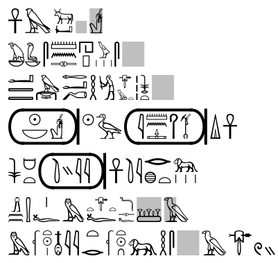
Long live Horus, the mighty bull who rises in truth.
The Two Ladies, who establish the law and pacify the two countries, the Golden Horus who is great of strength, the vanquisher of the Asiatics, the king of Upper and Lower Egypt (Neb-maat-ra)|, Son of Ra, (Amenhotep, prince of Thebes)|, given life.
The royal wife Tiye, that she may live.
One hundred lions killed by His Majesty in his hunts from the year 1 to the year 10; fearsome lions: 102
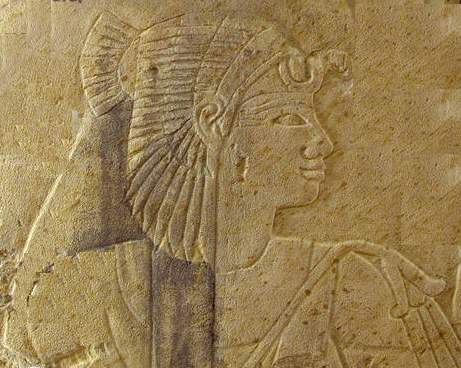
Princess / Queen Sitamen. Usually thought to be a daughter of Amenhotep III and Tiye. Her father elevated her to Great Royal Wife during the heb-sed festival in year 30. The famous Amenhotep son of Hapu became the Steward of her Estates.
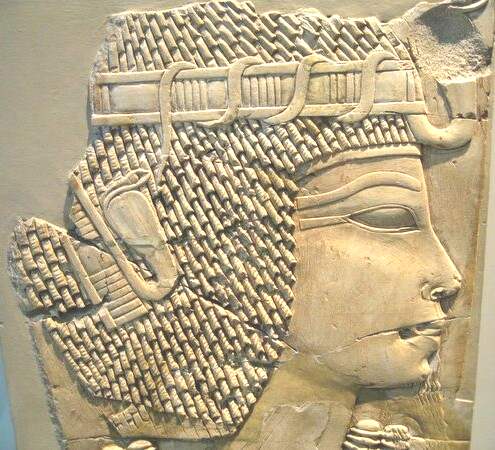
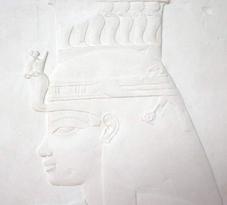
Amenhotep III (Berlin Museum)
Source: 1. Joshua J. Mark, “Amenhotep III,” Ancient History Encyclopedia, last modified July 15, 2011, http://www.ancient.eu /Amenhotep_III/.
