
Education For Life Academy
Where Black History Lives!

The Standing on the Shoulders of Giants Curriculum
Ancient Greek Testimony Regarding the Ancient Egyptians cont.
Page 2 of 3
My own conjectures were founded, first, on the fact that they are black-skinned and have woolly hair, which certainly amounts to but little, since several other nations are so too. But further and more especially, on the circumstance that the Colchians, the Egyptians, and the Ethiopians, are the only nations who have practised circumcision from the earliest times. The Phoenicians and the Syrians of Palestine themselves confess that they learned the custom of the Egyptians. And the Syrians who dwell about the rivers Thermodon and Parthenius, as well as their neighbors the Macronians, say that they have recently adopted it from the Colchians. Now these are the only nations who use circumcision, and it is plain that they all imitate herein the Egyptians. With respect to the Ethiopians, indeed, I cannot decide whether they learned the practice of the Egyptians, or the Egyptians of them (it is undoubtedly of very ancient date in Ethiopia). But that the others derived their knowledge of it from Egypt is clear to me, from the fact that the Phoenicians, when they come to have commerce with the Greeks, cease to follow the Egyptians in this custom, and allow their children to remain uncircumcised.”
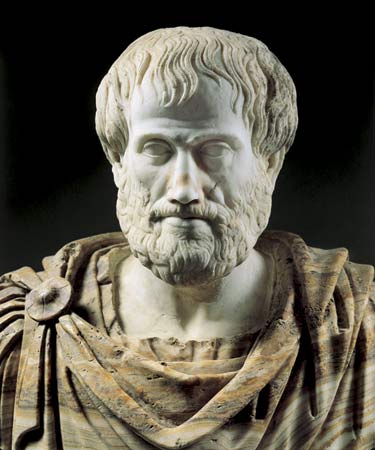
“Too black a hue marks the coward as witness Egyptians and Ethiopians and so does also too white a complexion as you may see from women, the complexion of courage is between the two.”
“Why are the Ethiopians and Egyptians bandy-legged? Is it because the bodies of living creatures become distorted
Lucian documents a conversation between two Greeks—Lycinus and Timolaus:
“Lycinus (describing a young Egyptian): ‘This boy is not merely black; he has thick lips and his legs are too thin . . . his hair worn in a plait behind shows that he is not a freeman.’
Timolaus: ‘But that is a sign of really distinguished birth in
"Now they relate that of all people the Aithiopians [Ethiopians] were the earliest, and say that the proofs of this are clear.
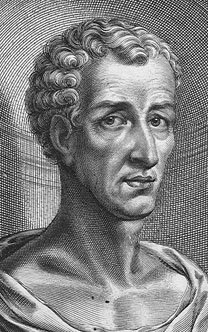
Lucian (Greek writer, 125 B.C.E.), Navigations
Diodorus Siculus (60 B.C.E.), Bibliotheke Historica
Aristotle (384 – 322 B.C.E.), Physiognomics
by heat, like logs of wood when they become dry? The condition of their hair supports this theory; for it is curlier than that of other nations, and curliness is as it were crookedness of the hair.
Egypt, Lycinus, All freeborn children plait their hair until they reach manhood. It is the exact opposite of the custom of our ancestors who thought it seemly for old men to secure their hair with a gold brooch to keep it in place.
“They (the Ethiopians) say also that the Egyptians are colonists sent out by the Ethiopians, Osiris [“King of Kings and God of Gods] having been the leader of the colony . . . they add that the Egyptians have received from them, as from authors and their ancestors, the greater part of their laws.”



Thales of Milete
624 - 546 B.C.E.
Iamblichus wrote that Thales of Milete had to make it clear to Pythagoras that the latter had to go to Memphis, in Egypt, to study. Thales added that it were the Egyptian priests that were a veritable source of knowledge and
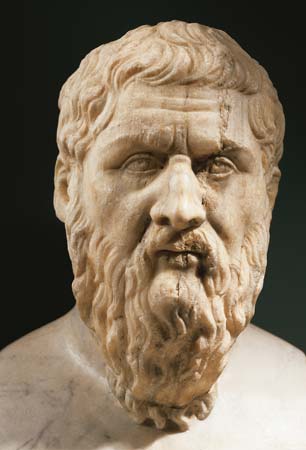
Plato
428 - 348 B.C.E.
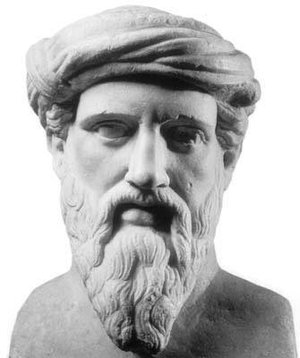
Pythagoras
570 - 495 B.C.E.
information. Thales stated this at a time when he himself was Greece’s most famous and applauded philosopher. During his residency in Egypt, Thales learned astronomy, land surveying, mensuration, engineering and Egyptian Theology.

Pythagoras travelled frequently to Egypt for the purpose of his education. Like every aspirant, he had to secure the consent and favour of the Priests, and we are informed by Diogenes that a friendship existed between Polycrates of Samos and Amasis King of Egypt,
that Polycrates gave Pythagoras letters of introduction to the King, who secured for him an introduction to the Priests...to each of whom Pythagoras gave a silver goblet.
Concerning Plato's travels we are told by Hermodorus that at the age of 28 Plato visited Euclid at Megara in company with other pupils of Socrates; and that for the next ten years he visited Cyrene, Italy and finally Egypt, where he received instruction from the Egyptian Priests.
Unit 1: Ancient Africa (200,000 B.C.E. – 476 A.C.E.)

Class 5: The Whitening of Ancient Kemet/Egypt
