
Education For Life Academy
Where Black History Lives!

The Standing on the Shoulders of Giants Curriculum
STUDY QUESTIONS (also in Study Guide)
- What was your first reaction after hearing/reading the song/book?
- Who is singing the nursery rhyme? Why is this important?
- What happened to the "Ten Little Niggers"? Why were they subjected to so much violence?
- Do you think this is a suitable children's nursery rhyme? Why or why not?
Introduction: The Politics of Education – Propaganda vs. Empowerment
Class 3: Race & Popular Culture: The History of the Coon, Mammy, Pickaninny & Sambo

Video: Ten Little Niggers Nursery Rhyme/Book/Movie
One overslept himself and then there were Eight.
Eight little nigger boys travelling in Devon;
One said he'd stay there and then there were Seven.
Seven little nigger boys chopping up sticks;
One chopped himself in halves and then there were Six.
Six little nigger boys playing with a hive;
A bumble bee stung one and then there were Five.
Five little nigger boys going in for law;
One got into Chancery and then there were Four.
Four little nigger boys going out to sea;
A red herring swallowed one and then there were Three.
Three little nigger boys walking in the Zoo;
A big bear hugged one and then there were Two.
Two little nigger boys sitting in the sun;
One got frizzled up and then there was One.
One little nigger boy left all alone;
He went out and hanged himself and then there were None.
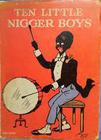
Ten little nigger boys went out to dine;
One choked his little self and then there were Nine.
Nine little nigger boys sat up very late;
Summary
It is generally thought that this song was adapted, possibly by Frank J. Green in 1869, as "Ten Little Niggers", though it is possible that the influence was the other way round, with "Ten Little Niggers" being a close reflection of the text that became "Ten Little Indians". Either way, "Ten Little Niggers" became a standard of the blackface minstrel shows. It was sung by Christy's Minstrels and became widely known in Europe, where it was used by Agatha Christie in her novel of the same name. The novel was later retitled And Then There Were None (1939), and remains one of her most famous works, about ten killings on a remote island.
Variants of this song have been published widely as children's books; what the variants have in common is 'that they are about dark-skinned boys who are always children, never learning from experience'. For example, it had been published in Holland by 1913; in Denmark by 1922; in Iceland in 1922; and in Finland in the 1940s. The Bengali poem Haradhon er Dosti Chhele is also inspired from Ten Little Indians.

