
Education For Life Academy
Where Black History Lives!

Curriculum Units
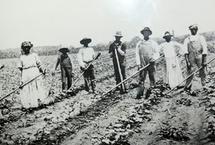
In this unit, students examine primary sources that tell the story of how African Americans pursued their visions of freedom in the decades following the abolition of slavery. Classes explore “Reconstruction” – a decade of political promise and legislative victories from 1865-1877 – as well as “Post-Reconstruction” – an era that included the erosion of Black rights and the rise of the Ku Klux Klan. This period of backlash, from the 1890s-1920 is often referred to as the nadir, or low point, in race relations. Yet, students will also engage this era as a critical period in the development of Black intellectual traditions and Black leadership, which sparked national debates regarding education, politics, community uplift, self-determination and the status of Black women.
The Standing on the Shoulders of Giants curriculum is divided into two parts with 10 Units. It begins with an introductory unit Education as Propaganda or Empowerment – which explores the relationship between politics, history and education, and contemplates how best to use education for empowerment. Please click PART 2 for Units 6 - 10.
Please note that we have replaced B.C./A.D. with the designations B.C.E (Before Common--or Christian--Era) and C.E. (Common--or Christian--Era) in order to recognize and respect multiple faiths.
PART 1
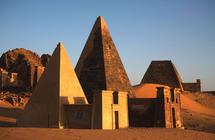
Unit 1 examines the African origins of modern humans (homo sapiens) 200,000 years ago, from the origins of civilization in the Nile Valley to the fall of the Roman Empire in 476 ACE. It traces the African origins of civilization in Ethiopia and beyond to the rise and fall of the Nile Valley civilizations of ancient Nubia and Egypt (Kemet). Students will analyze the African origins of ancient Egypt/Kemet – and the attempts to deny it – as well as Egypt’s relationship to Nubia, and the gifts these African civilizations gave to humanity. With nearly a dozen free e-books, slideshows, images, documentaries, maps, timelines, and more, students will gain new insight on the invaluable contributions early African civilizations gave to humanity.
UNIT 1 – ANCIENT AFRICA (200,000 B.C.E. – 476 A.C.E.)
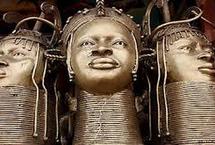
This period explores ancient African history before the invasion of Europeans in the 15th century C.E. Students will study the kingdoms of ancient Kush, Ghana, Mali, Songhay, Great Zimbabwe, Zulu, Benin and Ashanti and others. It also examines the influences of Christianity and Islam in Africa. Lessons will also expose students to the history of North Africa including Hannibal Barca and the Moors and their conquest of Spain, Sicily and Malta from 711 C.E. to 1492. To conclude the Unit, students will read Things Fall Apart, the masterpiece written by Chinua Achebe, which examines the economic, social and psychological effects of colonialism.
UNIT 2 – PRE-COLONIAL AFRICA (100 A.C.E. – 1899 A.C.E.)
UNIT 3 – THE TRANS-ATLANTIC SLAVE TRADE & AFRICAN COLONIZATION (1400 – 1899)
UNIT 4 – U.S. SLAVERY & THE CIVIL WAR (1619 – 1865)
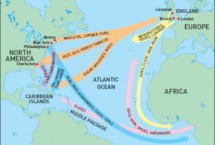
This Unit covers the Trans-Atlantic Slave trade from its foundations with the Portuguese and Spanish in the 15th century to the abolition of slavery in the United States. Students will trace the “triangular trade” from Africa to all points in the Western Hemisphere where Africans were enslaved, including Mexico, the islands of the West Indies, Central and South America as well as Canada. This unit provides maps, ship manifests, first-hand accounts of the trade, and many important statistics. It examines the causes, justifications and consequences of the trade, its impact on the African continent, and its relationship to the development of Western European nations.
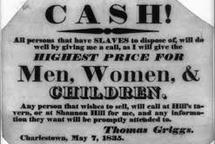
This period chronicles the 246 years in which Africans (and later African Americans) were enslaved in the United States. Students will learn the conditions that led to the enslavement of Africans, the justifications used to legitimize the new race-based form of slavery, and how Africans and others resisted slavery and racial oppression. Students will complicate standard historical narratives by exploring slavery in the North, free Black and maroon populations, and the cultural artifacts and traditions produced by enslaved men and women that speak to the resiliency of the human spirit. This unit is filled with dozens of first-hand accounts of slavery, facts and statistics that will challenge your understanding of this period of Black history.
UNIT 5 – RECONSTRUCTION AND POST-RECONSTRUCTION (1865 – 1920)


Coming soon!
Coming soon!
Coming soon!
Coming soon!
