
Education For Life Academy
Where Black History Lives!

The Standing on the Shoulders of Giants Curriculum


Stereotypes and the Clark Doll Test
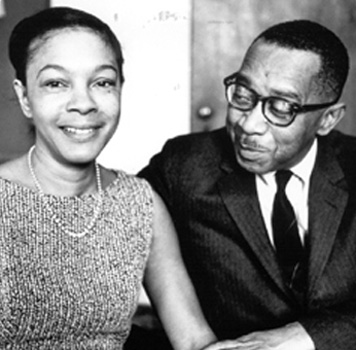
Kenneth & Mamie Phipps Clark, Creators of the famous "Doll Test"
Video: "Black Doll, White Doll"

Page 1 of 2
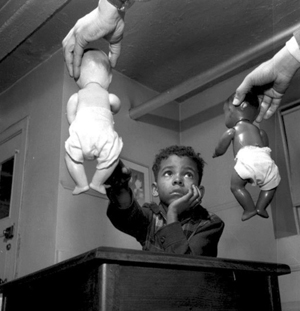
The Clark Doll test was conducted by Dr. Kenneth Clark and his wife Mamie Clark for her master's degree thesis. The study focused on stereotypes and children's self-perception in relation to their race. The results of Clark's study were used to prove that school segregation was distorting the minds of young black kids, causing them to internalize stereotypes and racism, to the point of making them hate themselves.
In 1954 in Brown v Board of Education, the experiment helped to persuade the American Supreme Court that "separate but equal" schools for blacks and whites were anything but equal in practice and is therefore illegal or against the law. It marked the beginning of the end of Jim Crow.
Methodology
In the experiment, Clark showed black children with ages ranging from 6 to 9, two dolls, one white and the other black, and asked the following questions in order:
- Show me the doll that you like best or that you would like to play with.
- Show me the doll that is the 'nice' doll.
- Show me the doll that looks 'bad.'
- Give me the doll that looks like a white child.
- Give me the doll that looks like a colored child.
- Give me the doll that looks like a Negro child.
- Give me the doll that looks like you.
Results
The researchers found that black children often chose to play with the white dolls more than the black ones. When the kids were asked to fill in a human figure with the color of their own skin, they frequently chose a lighter shade than their actual skin color. The children also gave the color 'white' positive attributes like good and pretty. On the contrary, 'black' was attributed to being bad and ugly.
The last question asked by the researchers was considered the worse since by that point, most of the black children had already identified the black doll as the bad one. Among the subjects, 44% said the white doll looked like them. In past tests however, many of the children refused to pick either doll or just started crying and ran away.




Racial Identification and Preference in Negro Children by Kenneth B. and Mamie P. Clark. This is the article in which the Clarks presented the results of their famed Doll Test.
Class 3: Real or Imaginary: The Psychological Effects of Racism on Blacks and Whites
Intro Unit: The Politics of Education – Enlightenment or Propaganda?
