
Education For Life Academy
Where Black History Lives!

The Standing on the Shoulders of Giants Curriculum
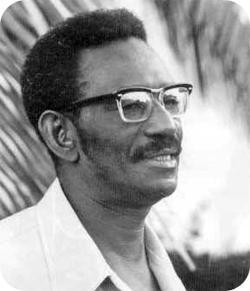
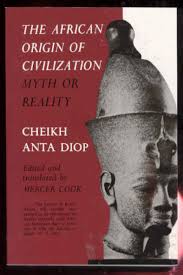
Although Morton conceded that Blacks were “abundantly represented” in the pictorial depictions inside of tombs and monuments, he denied they had any major influence on Egyptian civilization. He noted, “Negroes were numerous in Egypt but their social position in ancient times was the same that it now is, that of servants and slaves.” Besides, the size of Negro skulls was proof, according to Morton, that they did not have the intelligence to produce a high civilization. Cheikh Anta Diop, one of the foremost scholars of African history, counters this “falsification of history” that denied African history and reduced the Black race to nothing more than slaves. He states:
The memory of the recent slavery to which the Black race has been subjected, cleverly kept alive in men’s minds and especially in Black minds, often affects Black consciousness negatively. From that recent slavery an attempt has been made to construct—despite all historical truth—a legend that the Black has always been reduced to slavery by the superior White race with which he has lived, wherever it may have been. This enables Whites easily to justify the presence of Negroes in Egypt or in Mesopotamia or Arabia, by decreeing that they were enslaved. Although such an affirmation is nothing but dogma designed to falsify history—those who advance it are fully aware that it is erroneous—it nonetheless contributes to alienating Black consciousness…Throughout these transformations in the Negro’s relations with the rest of the world. It became increasingly difficult each day and even inadmissible, for those unaware of his past glory—and for Blacks themselves—to believe that they could have originated the first civilization which flowered on earth, a civilization to which humanity owes most of its progress.
The scientific community, led by Morton and others, relied on modern racial/racist theories to establish Ancient Egypt as a part of the family of Caucasian/white nations confirming white racial superiority. Even in the case of the Nubians, who were undeniably black Africans, Morton invented racial theories to minimize their role in human history.
In addition to using skulls, monuments, and Biblical tales to counter Herodotus’ claims of a black Egyptian civilization, Morton argued that the eyewitness account of Ptolemy, published in the 2nd century, A.C.E., was far more reliable. More than 500 years after Herodotus, Ptolemy recorded geographical accounts of the Egyptian population. For Morton, the demographics were “ample evidence” of a non-Black origin. It was appalling for an educated scholar to suggest that the people of Egypt remained virtually the same over a period of 500 years or more. Just as the U.S. population in 2014 does not reflect the nation’s demographics in 1614, the people who occupied Egypt after periods of foreign invasion and decline were not the same people who built the ancient Egyptian civilization.
Morton was not alone in his determination to establish Egypt as a Caucasian civilization. In 1851, Irish writer John Campbell dismissed African origins of Ancient Egypt in his book, Negro-mania: Being an Examination of the Falsely Assumed Equality of the Various Races of Men. He explained:
There is one great difficulty, and to my mind an insurmountable one, which is that the advocates of the negro civilization of Egypt do not attempt to account for, how this civilization was lost. We know that the white never loses, but always gains. A nation or tribe of the white race may become extinct, from a variety of causes, but the civilization of the race progresses notwithstanding. Egypt progressed, and why, because it was Caucasian.
Egyptology and Scientific Racism cont.
Page 4 of 5


Historian, anthropologist, physicist, and politician





Unit 1: Ancient Africa (200,000 B.C. – 646 A.D.)
Class 5: The Whitening of Ancient Kemet/Egypt
