
Education For Life Academy
Where Black History Lives!

The Standing on the Shoulders of Giants Curriculum
The emergence of Egyptology as a field of study in the 1800s opened opportunities to examine Africa’s contributions to world history. But it also allowed scholars to use their findings to reinforce old and new racial theories. Undoubtedly, archeological discoveries in Egypt during the French invasion from 1798-1801 led European scholars to make greater use of “science” in order to justify racial hierarchies, especially the enslavement of Africans. Even though ancient texts proved that the Ancient Egyptians were indeed African, a central theme within science communities was to prove otherwise. Many prominent Western scholars used their resources to deny African origins of Ancient Egypt.
In the article, “The Ancient World and Africa: Whose Roots?” Basil Davidson, renowned scholar of African history, explains the political and economic context that led many European scholars to deny African origins of Ancient Egypt. He writes:
That the Ancient Egyptians were black (again, in any variant you may prefer) - or, as I myself think it more useful to say, were African - is a belief which has been denied in Europe since about 1830, not before. It is a denial, in short, that belongs to the rise of modern European imperialism, and has to be explained in terms of the ‘new racism,’ specifically and even frantically an anti-black racism, which went together with and was consistently nourished by that imperialism…The racism that we know was born in Europe and America from the cultural need to justify doing to black people, doing to Africans, what could not morally or legally be done to white people, and least of all to Europeans. To justify the enslavement of Africans, in short, it was culturally necessary to believe, or be able to believe, that Africans were inherently and naturally less than human but were beings of a somehow
sub-human, non-human nature. That was the cultural basis, in the context, of the slave trade and of the modern imperialism in Africa which followed the slave trade.”
As Davidson argues, European scholars sought to justify the enslavement of Africans based on theories of white racial superiority. The vast accomplishments of Ancient Egypt undermined these theories that regarded Africans as subhuman or intellectually inferior. As a result, Western Egyptologists, scientists, and intellectuals launched a widespread campaign to racialize the Ancient Egyptians as white or Caucasian.
Egyptology and Scientific Racism
Page 1 of 5
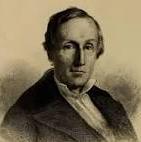

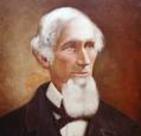
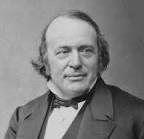
Josiah C. Nott
Louis Aggasiz
Samuel Morton
Johann Friedrich Blumenbach


- Analyze artifacts, monuments, and images of Ancient Egyptians in relation to modern concepts of race
- Compare and contrast the observations made by the Ancient Greeks vs. 18th-20th century Western scholars regarding the origins of Ancient Egyptians
- Analyze contemporary depictions of Ancient Egypt in Hollywood films and popular culture
- Define scientific racism and explain its impact on the shaping of historical narratives







Read the following materials:
View the following materials:
SLIDESHOW: How the Ancient Egyptians Depicted Themselves (10 min)
SLIDESHOW: Greco-Roman Egypt: 332 B.C.E. - 395 C.E. (7 min)
SLIDESHOW: Hollywood Depictions of Ancient Egyptians (5 min)
After completing this lesson, students will be able to:


Unit 1: Ancient Africa (200,000 B.C. – 646 A.D.)
Class 5: The Whitening of Ancient Kemet/Egypt
