
Education For Life Academy
Where Black History Lives!

Unit 5: Slavery in the U.S. (1619 – 1865)
The Standing on the Shoulders of Giants Curriculum
Jordan continues, "Thirty-six black men paid taxes as heads of families in Elizabeth City County and were employed as blacksmiths, bricklayers, fishermen, oystermen and day laborers. In three Norfolk County parishes 160 blacks owned a total of $41,158 in real estate and personal property.”
Indeed, not all free Blacks supported their enslaved brothers and sisters. In some instances, free Blacks like April “William” Ellison of South Carolina amassed great wealth and became slave owners themselves. Although born a slave, Ellison gained his freedom through manumission and sought to imitate the white planter class. He started a successful business manufacturing cotton gins and also worked as a cotton planter and slave “breeder.” Ellison invested heavily in Confederate war bonds and even had his sons fight in the Confederate army to preserve the institution of slavery. After the war, his fortune declined. He died a friend of the Confederacy.
The case of April “William” Ellison is an extreme one. In reality, many free Blacks fought against the enslavement of other Blacks. They participated in the Underground Railroad, purchased enslaved Blacks out of slavery when possible, and taught slaves how to read and write against the will of the law. In 1794, Richard Allen, a free Black man from Philadelphia, started the first independent Black church, the African Methodist Episcopal Church. Other free Blacks became ministers who preached a revolutionary gospel, even though preaching was illegal for free Blacks in many Southern states. Furthermore, thousands of free Blacks literally went back to Africa and colonized Liberia through the aid of the controversial American Colonization Society. Free Blacks also started anti-slavery petitions and weekly magazines and newspapers including Freedom's Journal, founded in 1827.
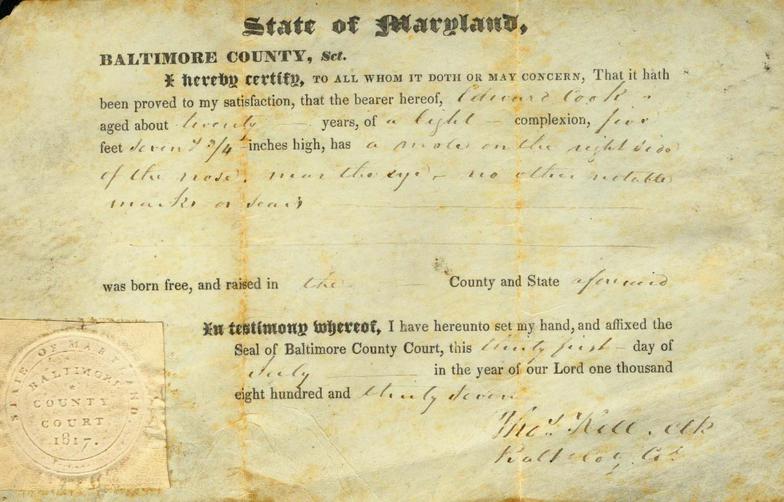
Despite independence, free Blacks were not free in the same sense as whites. There were many restrictions placed upon them and some states even prohibited free Blacks from settling within their borders. In the face of racial discrimination, a number of free Black families, like the Hodges, were able to amass substantial fortunes that they passed onto their children. They also fought tirelessly against the enslavement and mistreatment of other free Blacks. In this lesson, you will read a first-hand account of the trials and tribulations of a free Black family from Virginia, and how they worked to overcome and undermine slavery and white supremacy.
Class Overview cont.
Class 8: Free Blacks During Slavery
Page 2 of 2

What is now Bedford-Stuyvesant in Brooklyn, NY, Weeksville was the second-largest community for free blacks prior to the Civil War.
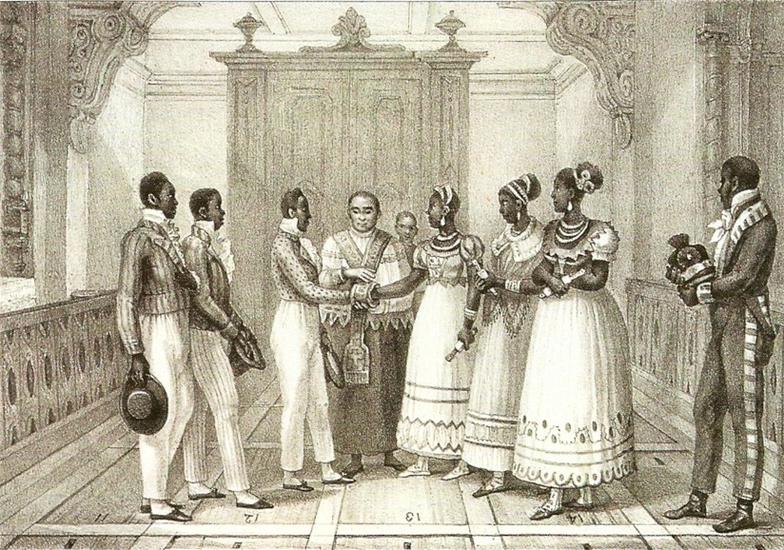
Many free blacks prospered despite the racist climate of the times. They created a middle-class in the midst of wholesale Black enslavement.


