
Unit 5: Slavery in the U.S. (1619 – 1865)
The Standing on the Shoulders of Giants Curriculum
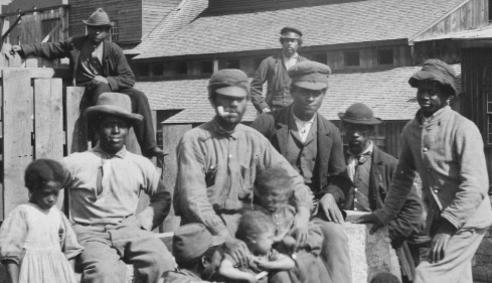
There are many misconceptions about slavery. One is that all Blacks were enslaved and all whites owned slaves. This is far from the truth. According to the 1860 census, for instance, there were 250,000 free Blacks living in the South and another 250,000 free Blacks in the North. Interestingly, less than 10% of the white population owned slaves.
The first Africans to arrive in Jamestown on a Dutch ship were considered indentured servants (even though many would argue that the conditions of indentured servitude were just as bad as slavery). Racism and race-based slavery had not yet been invented. In fact, one of those Africans, Anthony Johnson, was able to gain his freedom, own property, and buy slaves of his own. Through a successful lawsuit that he filed in 1655, Johnson was able to retain John Casor, another African, as his slave for life.
The majority of free Blacks were born free. Some received their freedom through manumission, or the granting of freedom by the master, usually upon the death of the master. Others worked and purchased their own freedom, and often that of relatives. Yet and still, people like Frederick Douglass and Harriet Tubman obtained their freedom by escaping. It is estimated that over 20,000 enslaved Blacks ran away each year. The Fugitive Slave Acts of 1793 and 1850 were enacted to help southern slaveowners re-capture Africans who ran away to the “free” North.
Free Blacks were often highly skilled artisans, doctors, educators, entrepreneurs, planters, entertainers, writers, cooks, and hairdressers. They owned a significant amount of land – in some cases more than the average whites around them. This was certainly the case in Virginia. In his book, Black Confederates and Afro-Yankees in Civil War Virginia, Ervin L. Jordan Jr. notes:
Free Afro-Virginians were a nascent Black middle class under siege, but several acquired property before and during the war. Approximately 169 free Blacks owned 145,976 acres in the counties of Amelia, Amherst, Isle of Wight, Nansemond, Prince William and Surry, averaging 870 acres each. Twenty-one Petersburg Blacks each owned property worth $1,000 and continued to purchase more despite the war...Some free Black residents of Hampton and Norfolk owned property of considerable value; 17 Black Hamptonians possessed property worth a total of $15,000...





Class Overview

After completing this lesson, students
will be able to:
- Understand the quality of life for free Blacks in the South
- Discuss ways in which many free Blacks fought against slavery and racial oppression despite their free status
- Recognize the legacies that free Blacks were able to pass down to future generations




Class 8: Free Blacks During Slavery
Education For Life Academy

Where Black History Lives!

Page 1 of 2

