
Education For Life Academy
Where Black History Lives!

The Standing on the Shoulders of Giants Curriculum
Video: Free Blacks in the Antebellum North (4:17 min)
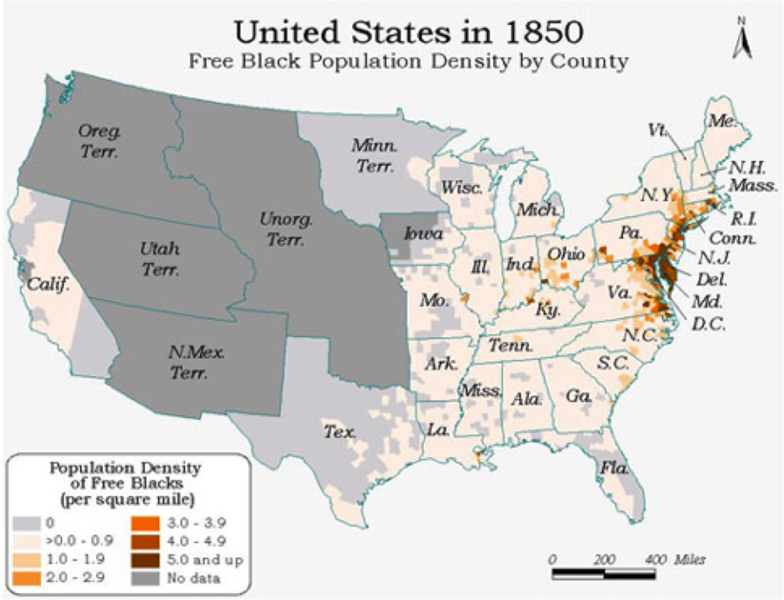
• In 1860, there were approx. 500,000 free Blacks in America (250,000 South, 250,000 North)
• In general, as the population of color became larger and more threatening to the white ruling class, governments put increasing restrictions on manumissions and curtailed the rights of free blacks.
• Many free blacks were born free. Others acquired freedom by way of manumission (which could itself occur for a variety of reasons), purchasing their freedom, winning lawsuits for their freedom or escaping.
• By the 19th century, there were flourishing families of free blacks who had been free for generations. In the United States, some free blacks achieved a measures of both wealth and societal participation, owning property, paying taxes, publishing newspapers and, in some Northern states, voting.
• Free blacks had restrictions on both their civil and political rights in most states. Property rights were sometimes respected, but also curtailed in some places.
• Free blacks were often hired by the government as rural police, to hunt down runaway slaves and keep order among the slave population.
• By 1776, approximately 8 percent of African Americans were free. By 1810, 4 percent of blacks in the South (10% in the Upper South), and 75 percent of blacks in the North were free. On the eve of the Civil War, free blacks comprised about 10% of the population.
• When the end of slavery came, the distinction between former free coloreds and former slaves persisted in some societies.
When the end of slavery came, the distinction between former free coloreds and former slaves persisted in some societies.

QUICK FACTS ABOUT FREE BLACKS (also in Study Guide)
Unit 5: Slavery in the U.S. (1619 – 1865)
Class 8: Free Blacks During Slavery
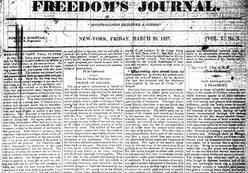
Freedom's Journal was the first African-American owned and operated newspaper published in the United States.
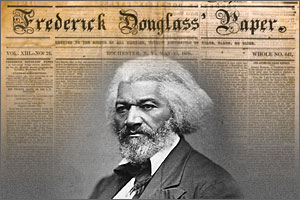
By 1851 Frederick Douglass had become established as one of the most influential black leaders of the 19th century. In this year he changed the title of his Rochester based newspaper, The North Star, to the “Frederick Douglass’ Paper.”

