
Education For Life Academy
Where Black History Lives!

The Standing on the Shoulders of Giants Curriculum
The emergence of Egyptology as a field of study in the 1800s opened opportunities to examine Africa’s contributions to world history. But it also allowed scholars to use their findings to reinforce old and new racial theories. Undoubtedly, archeological discoveries in Egypt during the French invasion from 1798-1801 led European scholars to make greater use of “science” in order to justify racial hierarchies, especially the enslavement of Africans. Even though countless monuments, sculptures, depictions in tombs, and ancient texts proved that the Ancient Egyptians were indeed African, a central theme within science communities was to prove otherwise. Many prominent European scholars used their resources to deny the African origins of ancient Egypt in order to uphold their newfound racist theory of African inferiority.
Racialization in the Age of Enlightenment
It was not until the 1800s, at the height of racial slavery in the New World, and on the heels of French imperialism in Egypt, that European thinkers began to aggressively counter established knowledge of Egypt as a Black civilization. German scientist Johann Friedrich Blumenbach, who was responsible for one of the earliest systems of racial categories, coined the term “Caucasian” and classified the Egyptians as members of the “Caucasian” (white) race. Within decades, the scientific community accelerated its efforts to prove non-African origins of Egypt.
Blumenbach was the first to pioneer the field of craniology. His work included his description of sixty human crania (skulls) published originally in fascicules as Decas craniorum (Göttingen, 1790–1828). Although he did not believe that Africans were inferior to the rest of mankind “concerning healthy faculties of understanding, excellent natural talents and mental capacities,” others used his work to formulate theories of racism and racial hierarchy, which placed Africans at the bottom of humanity and Caucasians at the top. Inadvertently his work became the foundation for other scientists in the field of craniometry, such as Samuel Morton of America, who used this research to promote modern racism.
One of the principal European scholars to deny the African origins of ancient Egypt of this period was German philosopher Georg Wilhelm Friedrich Hegel. In fact, many credit Hegel for providing a basis for modern racism and establishing a role for race in history by correlating a hierarchy of civilizations to a hierarchy of races, notably in his Encyclopaedia and The History of Philosophy.
Egyptology and Scientific Racism
Page 1 of 5
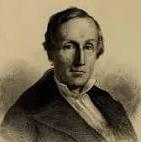
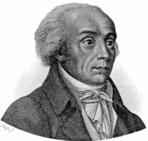
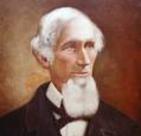
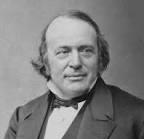
Josiah C. Nott
Louis Aggasiz
Samuel Morton
Johann Friedrich Blumenbach


Many historians credit Hegel for providing a basis for modern racism and establishing a role for race in history by correlating a hierarchy of civilizations to a hierarchy of races, notably in his Encyclopaedia and the History of Philosophy.


Unit 1: Ancient Africa (200,000 B.C.E. – 476 A.C.E.)

Class 6: The Whitening of Ancient Kemet/Egypt
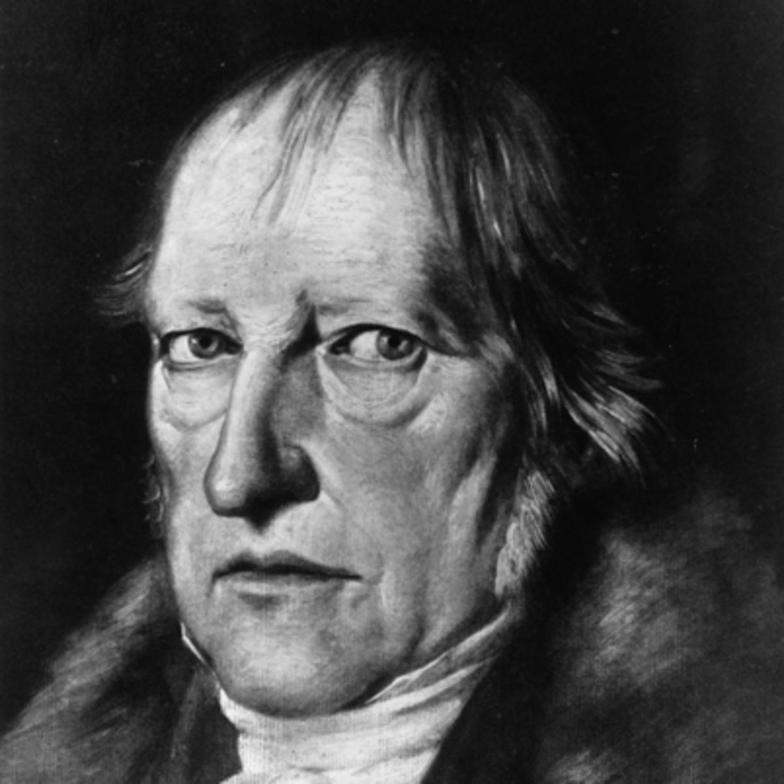
Georg Wilhelm Friedrich Hegel (1770-1831), German Philosopher
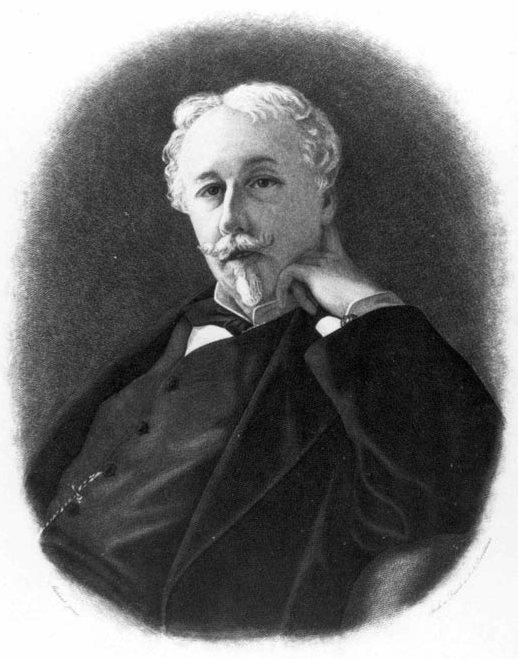
Gobineau was a French aristocrat who was best known by his
contemporaries as a novelist, poet and travel writer but is today most remembered for developing the theory of the Aryan master race and helping to legitimise racism by scientific racist theory and racial demography. Gobineau was an elitist who, in the immediate aftermath of the Revolutions of 1848, wrote a 1400-page book, An Essay on the Inequality of the Human Races in which he claimed that aristocrats were superior to commoners and that they possessed more Aryan genetic traits because of less inbreeding with inferior races (Alpines and Mediterraneans).
Gobineau's writings were quickly praised by white supremacist, pro-slavery Americans like Josiah C. Nott and Henry Hotze, who translated his book into English but omitted around 1000 pages of the original book, including those parts that negatively described Americans as a racially mixed population.
Arthur de Gobineau
(1816-1882)
