
Education For Life Academy
Where Black History Lives!

The Standing on the Shoulders of Giants Curriculum
In The History of Philosophy he wrote the following concerning Africa:
"At this point we leave Africa, not to mention it again. For it is no historical part of the World; it has no movement or development to exhibit. Historical movements in it-that is in its northern part-belong to the Asiatic or European World. Carthage displayed there an important transitionary phase of civilization; but, asisNahoenician colony, it belongs to Asia. Egypt will be considered in reference to the passage of the human mind from its Eastern to its Western phase, but it does not belong to the African Spirit. What we properly understand by Africa, is the Unhistorical, Undeveloped Spirit, still involved in the conditions of mere nature, and which had to be presented here only as on the threshold of the World's History." [Hegel, The Philosophy of History, 99.]
Robert Bernasconi in, “Hegel at the Court of the Ashanti”, regards Hegel as “a precursor of the mid-nineteenth century tendency to construct philosophies of history organized around the concept of race, such as we find in Robert Knox and [Joseph Arthur] Gobineau.” Knox believed that ‘race is everything’, so that literature, science, art — in a word, civilization — depends on it. Similarly, Gobineau, who is often regarded as the ‘father of modern racism’, used anthropology, linguistics and history to formulate a theory in which race virtually explained everything in the human experience. The decisive events of history, he argued in his Essay on the Inequality of Human Races (1854), are determined by the ‘iron law of race’, so that human destiny is decreed by nature and expressed in race. Gobineau also favored racial purity, suggesting that there should be no crossbreeding between races in order to maintain survival. By linking Hegel’s name with that of Knox and Gobineau, Bernasconi clearly implies that the philosopher was responsible for contributing to a distorted perception of race and thus helped to make racism more respectable.
Joseph Arthur, Comte de Gobineau (14 July 1816 – 13 October 1882) was a French aristocrat who was best known by his contemporaries as a novelist, poet and travel writer but is today most remembered for developing the theory of the Aryan master race and helping to legitimize racism by scientific racist theory and racial demography. Gobineau was an elitist who, in the immediate aftermath of the Revolutions of 1848, wrote a 1400-page book, An Essay on the Inequality of the Human Races in which he claimed that aristocrats were superior to commoners and that they possessed more Aryan genetic traits because of less inbreeding with inferior races (Alpines and Mediterraneans).
Gobineau's writings were quickly praised by white supremacist, pro-slavery Americans like Josiah C. Nott and Henry Hotze, who translated his book into English but omitted around 1000 pages of the original book, including those parts that negatively described Americans as a racially mixed population.
At the center of the scientific race debates in America was Samuel Morton, a natural scientist and professor of anatomy, widely considered the founder of American anthropology. Morton supported the theory of polygenesis, which claimed that the different races were separate species created from separate origins. His claim to fame was in the area of craniology, a branch of science that erroneously established white racial superiority and intelligence by measuring the size of human skulls. In 1844, he published Crania Aegyptiaca to dispute the eyewitness accounts of Herodotus who described the Egyptians as black Africans. In this study, Morton measured the dimensions and characteristics of 137 human crania from Egypt and concluded, “The valley of the Nile, both in Egypt and in Nubia, was originally peopled by a branch of the Caucasian race.” He suggested the Egyptians were a race in between the Indo-European and Semite races, and as the descendants of Ham they were therefore “affiliated with the Libyan family of nations.”
Egyptology and Scientific Racism cont.
Page 2 of 6

"When I visited the Sphinx, I could not help thinking that the figure of that monster furnished the true solution to the enigma (of how the modern Egyptians came to have their 'mulatto' appearance). "In other words, the ancient Egyptians were
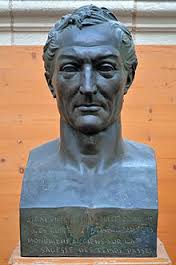


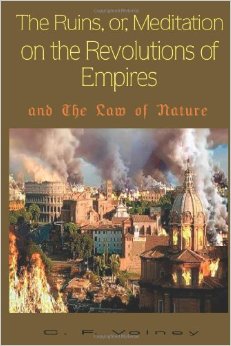
same type as all native-born Africans. That being so, we can see how their blood, mixed for several centuries with that of the Greeks and Romans, must have lost the intensity of its original color, while retaining nonetheless the imprint of its original mold."
C.F. Volney
true Negroes of the


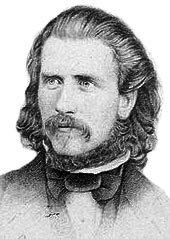
Gerald Massey
"Truth is all-potent with its silent power
If only whispered, never heard aloud, But working secretly, almost unseen, Save in some excommunicated Book; 'Tis as the lightning with its errand done Before you hear the thunder."
Unit 1: Ancient Africa (200,000 B.C.E. – 476 A.C.E.)

Class 6: The Whitening of Ancient Kemet/Egypt
