
Education For Life Academy
Where Black History Lives!

The Standing on the Shoulders of Giants Curriculum


Class Overview cont.

Unit 1: Ancient Africa (200,000 B.C.E. – 476 A.C.E.)
Class 10: Ancient Egypt: The New Kingdom and Third Intermediate Period (1550 B.C.E. – 712 B.C.E.)
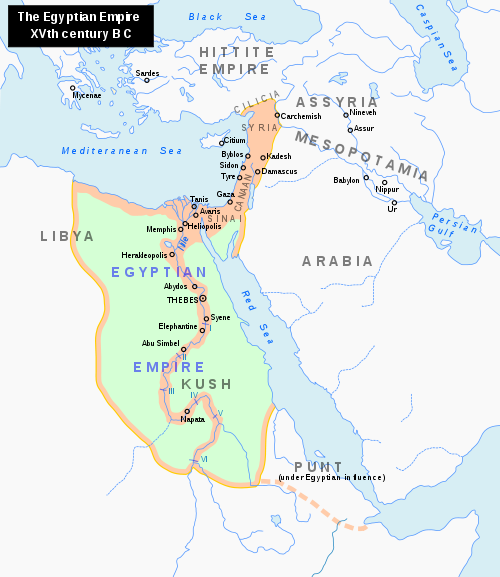
disrupted during the rule of the Hyksos. She also authorized a successful trade expedition to the land of Punt, bringing back exotic goods, most notably frankincense and myrrh.
Queen Tiye, Royal Wife of Amenhotep III, mother to Akhenaten, and grandmother to Tutankhamen, wielded a great deal of power during her husband’s and son’s reigns, which totaled 55 years. “The royal lineage was carried by the women of Ancient Egypt and marriage to one would have been a path to the throne for their progeny. Tiye became her husband’s trusted adviser and confidant. Being wise, intelligent, strong, and fierce, she was able to gain the respect of foreign dignitaries. Foreign leaders were willing to deal directly through her. She continued to play an active role in foreign relations and was the first Egyptian queen to have her name recorded on official acts.”
Nefertiti, Royal Wife of Akhenaten, like her mother-in-law, Queen Tiye, was a trusted confidant to her husband. Akhenaten and Nefertiti were responsible for the creation of a whole new religion in which they worshipped only one God, the Aten. With her husband, she reigned at what was arguably the wealthiest period of Ancient Egyptian history. Some scholars believe that Nefertiti ruled briefly as Neferneferuaten after her husband's death and before the accession of Tutankhamun, although this identification is a matter of ongoing debate.
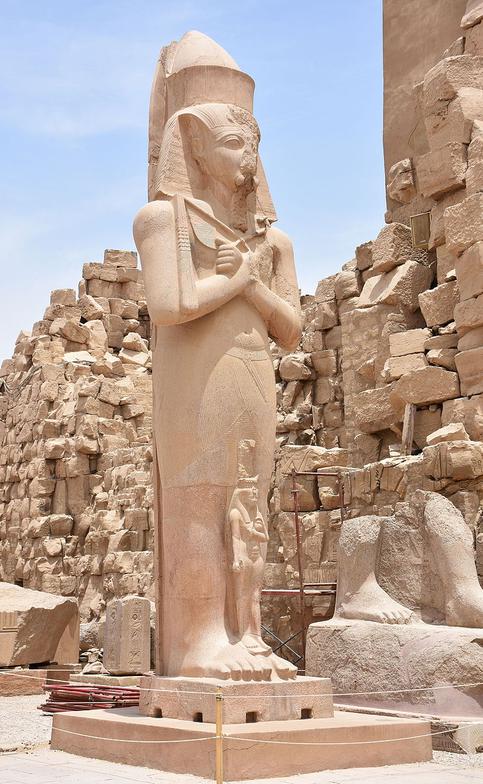
For half a millennia, the New Kingdom flourished, astonishing the world with such architectural marvels as the Mortuary Temple of Hatshepsut, the expansion of the Karnak Temple Complex including the Precinct of Mut, the massive Precinct of Amen-Re built by Ramesses II and the Great Temple of Amun built by Ramesses III. In addition there is Amenhotep III’s Colossi of Memnon and the temple for the pharaoh and his wife, Queen Tiye, in Nubia, the mystical city of Armana created by Akhenaten, the Temple of Seti I, and the magnanimous Temples of Ramesses II and Queen Nefertari, his Royal Wife, at Abu Simbel, Nubia to name a few.
Literature, drama and the arts also flourished during the New Kingdom, with love letters and poetry becoming commonplace. However, what is not often discussed is the literacy rate of ancient Egyptians. With the sheer volume of pyramid and temple text, papyri and other official writings, it is difficult to imagine that the ancient Egyptian population was illiterate or unskilled. In fact, the very opposite had to be true.
Of the eleven pharaohs that took the name of Ramesses during the Ramesside period (1292–1069 BCE) of the 20th Dynasty, Ramesses III, reign: 1186–1155 B.C.E., is considered to be the last great New Kingdom king to rule with any meaningful authority.
The Great Harris Papyrus or Papyrus Harris I, commissioned by his son and chosen successor Ramesses IV, “chronicles this king's vast donations of land, gold statues and monumental construction to Egypt's various temples at Piramesse, Heliopolis, Memphis, Athribis, Hermopolis, This, Abydos, Coptos, El Kab and other cities in Nubia and Syria. It also records that the king dispatched a trading expedition to the Land of Punt and quarried the copper mines of Timna in southern Canaan.”
During his reign, Ramesses III was subjected to multiple invasions, which heavily strained the Egyptian economy. Ramesses III’s murder is rumored to be have been a conspiracy. “Rameses III's death was followed by years of bickering among his heirs. Three of his sons ascended the throne successively as Ramesses IV, Rameses VI and Rameses VIII. Egypt was increasingly beset by droughts, below-normal flooding of the Nile, famine, civil unrest and official corruption. The power of the last pharaoh of the dynasty, Ramesses XI, grew so weak that in the south the High Priests of Amun at Thebes became the de facto rulers of Upper Egypt, and Smendes controlled Lower Egypt even before Rameses XI's death. Smendes eventually founded the Twenty-First dynasty at Tanis.” This begins the Third Intermediate Period, which constitutes the 21st-25th Dynasties.
Page 2 of 2

