Education For Life Academy
Where Black History Lives!

The Standing on the Shoulders of Giants Curriculum


Class Overview cont.




Page 2 of 2

Read/View the following material:
Unit 1: Ancient Africa (200,000 B.C.E. – 476 A.C.E.)

Recommended: The Kushite Conquest of Palestine and the 'Assyro-Kushite Wars' (20-25 min)
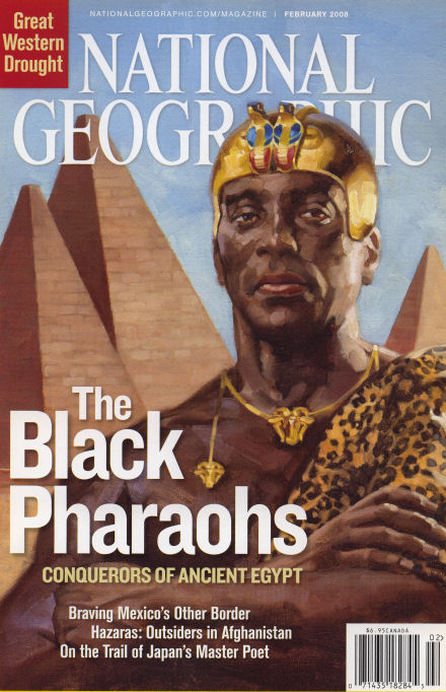
In biblical depictions, he is the saviour of the Hebrew people, as they are being besieged by Sennacherib (Isaiah 37:8-9, & 2 Kings 19:8-9). In modern times, the Sudanese people consider Piye and Taharqa as historical figures and regard them more than the other pharaohs from the Twenty-fifth dynasty of Egypt.
The collapse of the 25th Dynasty
Nubian rule, which viewed itself as restoring the true traditions of Egypt, benefited Egypt economically and was accompanied by a revival in temple building and the arts that continued throughout the Late Period. At the same time, however, the country faced a growing threat from the Assyrian empire to its east. After forty years of relative security, Nubian control—and Egypt's peace—were broken by an Assyrian invasion in ca. 671 B.C. The current pharaoh, Taharqo (ca. 690–664 B.C.), retreated south and the Assyrians established a number of local vassals to rule in their stead in the Delta. One of them, Necho I of Sais (ca. 672–664 B.C.), is recognized as the founder of the separate Dynasty 26. For the next eight years, Egypt was the battleground between Nubia and Assyria. A brutal Assyrian invasion in 663 B.C. finally ended Nubian control of the country. The last pharaoh of Dynasty 25, Tanutamani (664–653 B.C.), retreated to Napata. There, in relative isolation, he and his descendants continued to rule Nubia, eventually becoming the Meroitic civilization, which flourished in Nubia until the fourth century A.D.
Sources:
Ancient Egypt, “Taharqa” by Anneke Bart
Snowden, Before Color Prejudice: The Ancient View of Blacks. Cambridge: Harvard University Press, 1983, p.52
Allen, James, and Marsha Hill. "Egypt in the Late Period (ca. 712–332 B.C.) ". In Heilbrunn Timeline of Art History. New York: The Metropolitan Museum of Art, (October 2004)

Class 14: Ancient Egypt: The 25th Nubian Dynasty (760 B.C.E. – 664 B.C.E.)