Education For Life Academy
Where Black History Lives!

The Standing on the Shoulders of Giants Curriculum



Class Overview cont.
Page 2 of 2
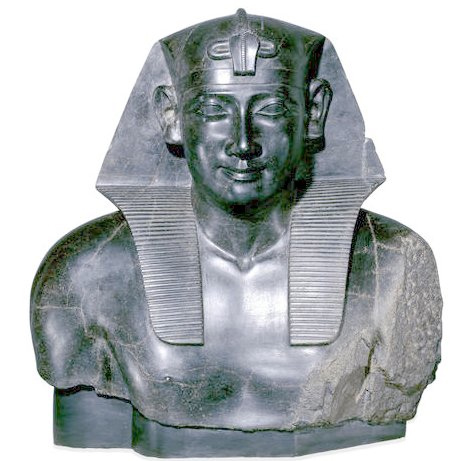
Ptolemy I Sotor (Savior), declared himself king of Egypt in 306 or 305 BC. Ptolemy I and his descendants respected Egyptian religion and culture and imitated their style of dress and architecture.

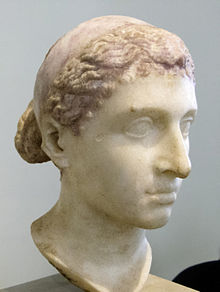
Bust believed to be of Cleopatra VII Philopator, Altes Museum, Berlin. Cleopatra VII was the last ruler of the Macedonian Dynasty of Egypt.
Unit 1: Ancient Africa (200,000 B.C.E. – 476 A.C.E.)
Class 14: Ancient Egypt: Greco-Roman Period (332 B.C.E. – 476 A.C.E.)

By 305 Ptolemy declared himself king of Egypt. Like Alexander, Ptolemy and his descendants showed respect for Egyptian culture and religion, even as they used Egyptian religion to their advantage. They adopted Egyptian dress, participated in Egyptian rituals, and had themselves displayed on monuments in Egyptian style. They also started a practice of marrying their sisters and nieces to keep rule within the same family. While it is reported in popular culture, there is no historical evidence of this type of incest amongst native Egyptian pharaohs.
The Ptolemaic Kingdom fell as a result of native rebellions that led to civil wars, which ultimately weakened the kingdom. The Ptolemaic dynasty of pharaohs ruled for approximately 300 years before it was annexed by Rome in 30 BC. The famed Cleopatra VII was the last Greek of the Ptolemaic line to rule ancient Egypt.
Cleopatra VII (69 BC – 30 BC)
Cleopatra VII was the last Macedonian ruler of ancient Egypt. Cleopatra's father was King Ptolemy XII. Little is known about Cleopatra's mother, but some speculate that she was of black African descent. One of the reasons for this theory is the fact that Cleopatra VII spoke Egyptian, which no Ptolemaic pharaoh had done before her. The assumption is that the only way for her to have achieved this feat was to have had someone very close to her who spoke and taught her Egyptian, like a mother. However, Cleopatra is said to have spoken 7 or 8 languages, which would challenge this theory.
Although she accomplished much in her time as ruler, most of the histories or stories of her surround her relationship with Julius Caesar and Mark Anthony. It is believed that she gave birth to a son by Caesar named Caesarian, although Caesar never claimed the child. In an event made for the soap operas, Cleopatra committed suicide in 30 BC after learning that Mark Antony had committed suicide after he was falsely told that she had died.
Egypt Under the Romans (30 BC – 646 AD)
After the deaths of both Mark Anthony and Cleopatra VII, Octavian, who would later become Augustus Caesar, annexed Egypt as a Roman province called Aegyptus. Augustus was the founder of the Roman Republic and ruled as its first Emperor from 27 BC until his death in 14 AD (41 years).
Unlike the Greeks, the Romans did not populate Egypt. Greek culture was left to continue along with native Egyptian culture and religion. The Romans were more interested in Egypt for its resources. They became known for their heavy taxation. The Romans used Egypt as a strategic resource, principally as the breadbasket for the Roman army.
Unlike the Greeks, the Romans did not have the centuries of contact with the Egyptians, as did the Greeks. Therefore, they were less inclined to live amongst the Greeks and Egyptians or institute Roman culture. Christianity, legalized in 313 AD by the Romans, would be one of Rome's most enduring legacies in Egypt.
Christianity in Egypt (33 AD - 646 AD)
The Roman empire was anti-Christian for a period of over 300 years. Anti-Christian policies against the early church and persecution of early Christians happened sporadically throughout this period. The first persecution of Christians organized by the Roman government took place under the emperor Nero in 64 AD after the Great Fire of Rome (which many accuse him of orchestrating). By 200 AD however, Christianity had become the dominant religion in Alexandria. By 300 AD Roman emperors co-opted Christianity and used it as a new unifying force for the Roman Empire.
In 313 AD persecution of Christians ended when the Roman Emperors Constantine the Great and Licinius jointly issued the Edict of Milan, which legalized the Christian religion. Yet with the legalization of Christianity came the repression of other religions, including that of ancient Egypt. The worship of Egyptian gods was now considered paganism. Yet as late as the 5th century AD there is evidence that individuals were still worshiping ancient Egyptian gods such as Isis despite the dominance of Christianity.