Education For Life Academy
Where Black History Lives!

The Standing on the Shoulders of Giants Curriculum

Africa and its people are the most written about and the least understood of all of the world's people. This condition started in the 15th and the 16th centuries with the beginning of the slave trade system. The Europeans not only colonized most of the world, they began to colonize information about the world and its people. In order to do this, they had to forget, or pretend to forget, all they had previously known about the Africans. They were not meeting them for the first time; there had been another meeting during Greek and Roman times. At that time they complemented each other. The African, Clitus Niger, King of Bactria, was also a cavalry commander for Alexander the Great. Most of the Greeks' thinking was influenced by this contact with the Africans. The people and the cultures of what is known as Africa are older than the word "Africa." According to most records, old and new, Africans are the oldest people on the face of the earth. The people now called Africans not only influenced the Greeks and the Romans, they influenced the early world before there was a place called Europe.
When the early Europeans first met Africans, at the crossroads of history, it was a respectful meeting and the Africans were not slaves. Their nations were old before Europe was born. In this period of history, what was to be later known as "Africa" was an unknown place to the people who would someday be called, "Europeans." Only the people of some of the Mediterranean Islands and a few states of what would become the Greek and Roman areas knew of parts of North Africa, and that was a land of mystery. After the rise and decline of Greek civilization and the Roman destruction of the city of Carthage, they made the conquered territories into a province which they called Africa, a word derived from "afri" and the name of a group of people about whom little is known. At first the word applied only to the Roman colonies in North Africa. There was a time when all dark-skinned people were called Ethiopians, for the Greeks referred to Africa as, "The Land Of The Burnt-Face People."
If Africa, in general, is a man-made mystery, Egypt, in particular, is a bigger one. There has long been an attempt on the part of some European "scholars" to deny that Egypt was a part of Africa. To do this they had to ignore the great masterpieces on Egyptian history written by European writers such as, Ancient Egypt. Light of the World, Vols. I & II, and a whole school of European thought that placed Egypt in proper focus in relationship to the rest of Africa.
The distorters of African history also had to ignore the fact that the people of the ancient land which would later be called Egypt, never called their country by that name. It was called, Ta-Merry or Kampt and sometimes Kemet or Sais. The ancient Hebrews called it Mizrain. Later the Moslem Arabs used the same term but later discarded it. Both the Greeks and the Romans referred to the country as the "Pearl Of The Nile." The Greeks gave it the simple name, Aegyptcus. Thus the word we know as Egypt is of Greek Origin. Until recent times most Western scholars have been reluctant to call attention to the fact that the Nile River is 4,000 miles long. It starts in the south, in the heart of Africa, and flows to the north. It was the world's first cultural highway.



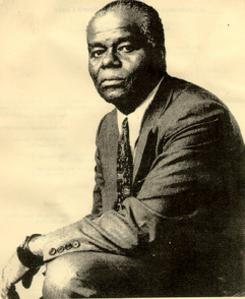
Why Africana History? (Excerpt) by Dr. John Henrik Clarke

Class 1: African History: The Missing Pages of World History
Activity 1: World History Timeline (5-10 min)
Activity 2: Have class read Intro Unit Overview (10 min)
Activity 3: Word Association (10 min)
Activity 4: How to Use the Curriculum (10 min)
(Watch until end of class, watch rest as homework)
Homework: Intro Class 2
After completing this lesson, students
will be able to:
"To control a people you must first control what they think about themselves and how they regard their history and culture. And when your conqueror makes you ashamed of your culture and your history, he needs no prison walls and no chains to hold you."
"People don't beg other people to restore their history; they do it themselves."
- Dr. John Henrik Clarke
- Recognize the political nature of education, specifically as it relates to African history
- Understand the importance history plays in how a race or group functions as a people
- Understand the syllabus, class format and class expectations


Page 1 of 3

Intro Unit: The Politics of Education – Enlightenment or Propaganda?