Education For Life Academy
Where Black History Lives!

Unit 1: Ancient Africa (200,000 B.C.E. – 476 A.C.E.)
The Standing on the Shoulders of Giants Curriculum
Around 3800 – 3500 B.C.E., Africans founded one of the first and most advanced civilizations in world history in the Nile Valley region of Africa, which included modern day Ethiopia, Sudan and Egypt. In fact, the oldest human remains ever found were discovered in Africa, with recent discoveries emerging in Ethiopia. According to Ethiopians and other historians of antiquity, Ethiopia is the oldest civilization on earth. It fostered the civilization of Nubia to the west, which in turn influenced the civilization of Egypt in the north. Although Egypt represents some of highest cultural achievements of Nile Valley civilizations, it is the product of the collective African genius. The Nile River, the longest in the world, connected Africans in the south to those in the north and drew others from the interior. Together, these Africans shared and expanded their knowledge and resources and practiced similar cultural and religious rituals. This collective genius found its greatest expression in ancient Kemet, renamed Egypt by the Greeks. For the first 2,000 years of recorded history ancient Egypt was the light of the world. It was an African civilization built on the African continent by African people based on indigenous African culture and spirituality.
Egypt, by its location, had the highest contact with the non-African world, and was subsequently invaded and conquered in ancient times by the Hyksos, the Libyans, the Nubians, the Assyrians, the Babylonians, the Persians, the Greeks, the Romans, the Arabs, the Turks, the French and the British. Thus, Egyptian society was always a melting pot of African and foreign cultures, resulting in a population with highly varied skin colors. Yet the people who established Egypt – its first Dynastic Pharaohs and those who built the Great Pyramids, were from southern and eastern Africa.
Because of the splendor and unequivocal brilliance of Ancient Egypt, those who cultivated the modern racist theories of the 18th – 19th centuries began to claim that Egypt was actually established by Caucasians – not Africans. Therefore, this class will explore the whitening of Ancient Egypt. The Greeks referred to this extraordinary civilization as Aegyptos, the origin of the name Egypt. But Africans called their land “KMT” or Kemet. The people of Ancient Kemet/Egypt invented one of the oldest writing systems, including paper made out of papyrus, and established the world’s first libraries and universities. They pioneered the arts and sciences and provided the foundations for many different fields including religion, philosophy, astronomy, agriculture, mathematics, architecture, medicine, government and engineering.


Class Overview
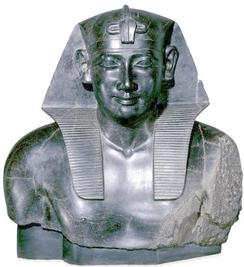
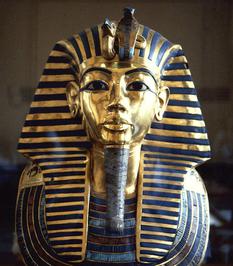
Pharaoh Tutankhamen
Ruler of Egypt (1332 – 1323 B.C.E.)
Ptolemy I Soter,
Ruler of Egypt (323 – 283 B.C.E.)
Page 1 of 3



Read/view the following materials:
10 Arguments That Prove Ancient Egyptians Were Black (10-15 min) PDF
SLIDESHOW: How the Ancient Egyptians Depicted Themselves (10 min)
SLIDESHOW: Greco-Roman Egypt: 332 B.C.E. - 476 A.C.E. (7 min)
SLIDESHOW: Hollywood Depictions of Ancient Egyptians (5 min)
- Analyze artifacts, monuments, and images of Ancient Egyptians in relation to modern concepts of race.
- Compare and contrast the observations made by the Ancient Greeks vs. 18th-20th century Western scholars regarding the origins of Ancient Egyptians.
- Analyze contemporary depictions of Ancient Egypt in Hollywood films and popular culture.
- Define scientific racism and explain its impact on the shaping of historical narratives.
After completing this lesson, students will be able to:


Class 6: The Whitening of Ancient Kemet/Egypt